


Proactive Operations, Not Reactive Fixes
When a new client comes on board, one of the first things we see is a common pattern: open vulnerabilities, misconfigured core components, poor backups, and cloud environments left wide open. These aren't edge cases. They're what happens when IT is managed reactively. Waiting for something to break is too expensive an option for organizations where downtime has real consequences.
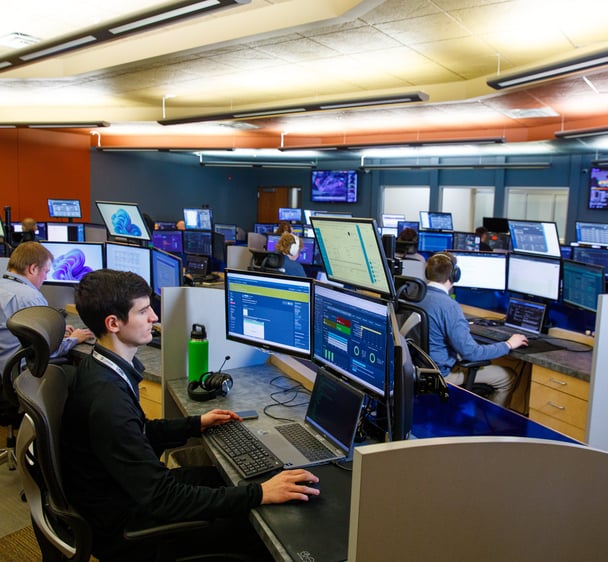
Continuous oversight of your environment through patching, maintenance, and around-the-clock monitoring is designed to catch problems before they surface. That’s the difference between reacting to IT problems and preventing them.
-

Continuous Monitoring
Your environment is monitored 24/7 across servers, endpoints, network devices, and cloud systems. Automated alerting surfaces anomalies in real time, and our team validates and responds to critical alerts around the clock.
-

Patching and Endpoint Management
We maintain a consistent, documented patching cadence across operating systems, applications, and firmware. We monitor endpoint health continuously and address issues before they affect performance or create exposure.
-
.png?width=32&height=32&name=PainPoints%20(1).png)
Environment Standardization
Inconsistent environments create blind spots, and blind spots create risk. By standardizing configurations and security controls across all client environments, we detect issues earlier, respond more precisely, and provide auditors with a consistent, defensible picture of your infrastructure.
The Tools Monitor. Our Team Acts.
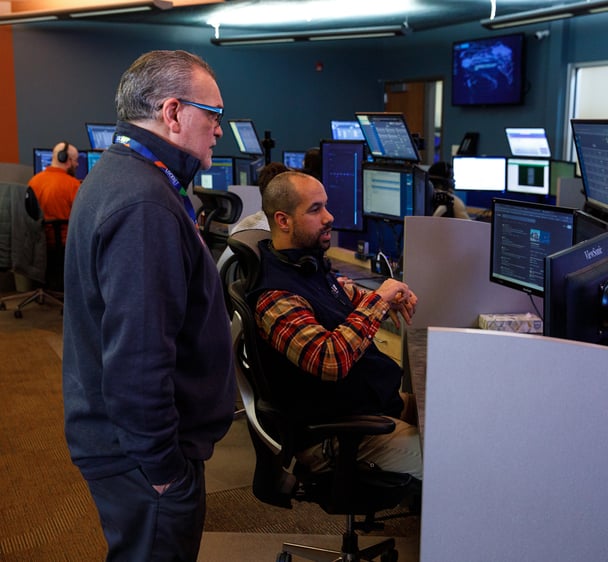
When a threat is detected, it’s triaged by in-house security experts. Our security and operations teams, including a team of dedicated security engineers and analysts plus broader operations staff, don't just respond to alerts. They trace the entry point, assess the full scope of exposure, and identify what needs to change to prevent a recurrence.
That level of depth is what separates operational maintenance from operational security. We've built protections that eliminate entire classes of vulnerability across all of our clients’ environments at once, not because a tool flagged it, but because our team recognized the pattern and acted on it.
The relationship isn't only about what happens when something goes wrong. Over time, our team develops a genuine understanding of your environment — your systems, your workflows, and the context that makes your organization unique. When you have a question, you have a consistent team to reach. One that already knows your setup and can give you a straight answer without the technical runaround.
When Something’s Wrong, We Don’t Wait for You to Tell Us
Every alert has a process. Every process has an owner. Here’s what happens from the moment a problem is detected.
-
01

Step One: Detection
Our monitoring systems flag the anomaly in real time. For security events, automated protections isolate the affected system from the network immediately to contain the threat before it can spread.
-
02

Step Two: Triage and Notification
A dedicated security engineer takes ownership of the event and begins an investigation. You’re notified right away, with context on what was detected and what’s being done about it.
-
03

Step Three: Containment and Remediation
The team works the problem until it’s resolved: identifying the root cause, stopping lateral movement, and eradicating the threat. Everything is documented in detail throughout the process.
-
04

Step Four: Closure and Prevention
Once resolved, we don’t just close the ticket. We identify how the threat got in, close the gap, and push those protections across every environment we manage.