Cybersecurity management used to be a technology problem. Today, it is a business risk problem.
For regulated organizations, the stakes are especially high. A security can disrupt patient care, delay financial operations, halt projects, damage client trust, and trigger compliance consequences.
At the same time, internal IT teams are being asked to manage more risk with fewer resources.
That is why many organizations are turning to managed security services to strengthen protection, improve visibility, and reduce operational strain.
Why cybersecurity management is harder than it looks
Below are some of the most common cybersecurity management challenges organizations face today and how managed security service providers (MSSPs) help solve them.
1. Limited operations coverage
Cyber threats do not occur only during business hours. Ransomware attacks, credential compromises, and suspicious activity can impact the business outside the standard workday when internal teams are unavailable.
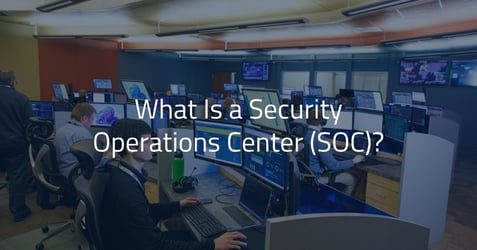
Yet many small and mid-sized organizations lack the resources to build and staff a full security operations center (SOC).
How MSSPs deliver round-the-clock coverage without the overhead
Managed security services solve this challenge by providing:
- 24/7 threat monitoring
- Continuous log analysis
- Real-time alerting and escalation
- Around-the-clock incident investigation
Instead of trying to build an internal SOC from scratch, organizations gain enterprise-grade monitoring without the overhead of hiring and retaining an overnight security team.
For regulated industries where downtime and exposure carry serious consequences, continuous visibility is no longer optional.
2. Security staffing shortages and expertise gaps
Cybersecurity talent shortages continue to impact organizations nationwide.
According to ISC2’s 2024 Cybersecurity Workforce Study, the global cybersecurity workforce gap exceeds 4 million professionals.
For many organizations, hiring experienced analysts, compliance specialists, and incident responders is difficult, especially in regional markets where talent competition is intense.
How MSSPs give you access to specialized skills on demand
Managed security service providers help close those expertise gaps by giving organizations access to:
- Security analysts
- Incident response expertise
- Compliance specialists
- Security engineering support
- Threat intelligence resources
This is especially valuable for lean internal IT teams that need expert support without adding significant headcount and the costs associated with it.
3. Threat monitoring and incident response delays
Many organizations have security tools in place but lack the processes, staffing, or visibility needed to respond effectively when threats emerge.
The result:
- Alerts go unnoticed
- Investigations take too long
- Threats remain active longer than they should
How MSSPs operationalize detection and response workflows
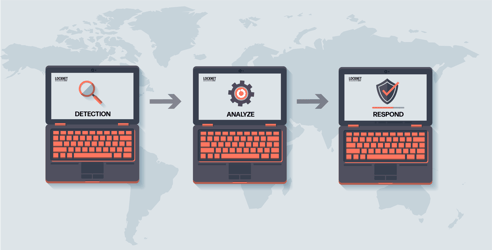
Managed security services improve threat monitoring and incident response by introducing:
- Mature detection workflows
- Escalation procedures
- Centralized monitoring
- Threat correlation
- Faster containment processes
Because most failures do not happen within a single system. They happen between systems and during response gaps.
4. Compliance and audit readiness pressure
Healthcare providers, financial institutions, and other regulated organizations face growing compliance expectations tied to frameworks such as:
- HIPAA
- PCI-DSS
- SOC 2
- FFIEC guidance
- Cyber insurance requirements
How MSSPs help you maintain a defensible, audit-ready posture
Managed security service providers help organizations:
- Maintain audit-ready reporting
- Monitor compliance-related controls
- Reduce security gaps
- Support documentation requirements
- Improve risk management processes
For leadership teams, this creates something equally important - confidence during audits, assessments, and security reviews.
5. Alert fatigue and prioritization problems
Security tools generate enormous volumes of alerts many of which can be low priority, redundant, or false positives.
Internal teams can quickly become overwhelmed trying to determine:
- Which alerts matter
- Which incidents require escalation
- Which activity is truly dangerous
This creates alert fatigue, one of the biggest operational challenges in cybersecurity management today.
How MSSPs triage and filter what actually matters
Managed security services help reduce noise by:
- Filtering non-critical alerts
- Prioritizing high-risk activity
- Tuning detection tools
- Escalating only validated threats
That allows internal teams to focus on business-critical priorities instead of chasing thousands of notifications.
6. Security tool sprawl and complexity
Over time, organizations can accumulate security tools from multiple vendors:
- Endpoint protection
- Email security
- Firewalls
- MFA platforms
- Vulnerability scanners
- SIEM solutions
But owning tools does not automatically improve security. Without proper integration, tuning, and oversight, fragmented environments create blind spots and operational complexity.
How MSSPs consolidate and operationalize your stack
Managed security service providers help consolidate and operationalize security investments by:
- Integrating platforms
- Improving visibility across environments
- Managing tool configurations
- Reducing overlap and inefficiencies
One accountable partner often delivers greater clarity than multiple disconnected vendors.
7. Unpredictable security costs
Building internal cybersecurity operations can become expensive quickly.
Organizations must account for:
- Hiring and retention
- Security tooling
- SOC infrastructure
- Training and certifications
- Compliance support
- Incident response preparedness
How a managed model converts risk into predictable opex
Managed security services help convert unpredictable capital expenses into a more manageable operational model.
For CEOs and business owners, that means:
- More predictable budgeting
- Reduced staffing pressure
- Lower hidden operational costs
- Better alignment between risk and investment
The real value is not in simply reducing IT workload but in reducing exposure, uncertainty, and business disruption.
Why these challenges continue to grow
Cybersecurity management challenges are increasing because business environments are becoming more connected, more regulated, and more dependent on technology. At the same time, businesses are feeling internal and external pressure on costs, security, and compliance.
Is your organization facing these challenges?
- Internal IT teams that are stretched thin
- More sophisticated threat environments
- Expanded compliance expectations
- Downtime impact is more costly
For organizations operating in high-stakes environments, cybersecurity can no longer function as a reactive support role. It requires continuous oversight, shared accountability, and proactive risk management.
Managed Security Services FAQs
Here are answers to some of the most common questions organizations ask about managed security services, MSSPs, compliance support, and cybersecurity management.
What to look for in a managed security services provider
Not all managed security service providers operate the same way.
Some focus primarily on tools and ticket volume. Others operate as true strategic partners.
Organizations should look for an MSSP that provides:
- Security-led managed IT and cybersecurity
- 24/7 SOC monitoring and incident response
- Experience in regulated industries
- Compliance and audit support
- Clear communication and accountability
- Consistent personnel and long-term relationships
Most importantly, look for a provider that understands your environment and shares responsibility for outcomes.
Because when risk is high, accountability matters.
See what shared accountability looks like
For organizations in banking, healthcare, and other regulated industries, cybersecurity management has become too critical to navigate alone.
The right managed security services partner helps reduce risk, eliminate blind spots, and provide confidence when it matters most.
Locknet delivers security-led managed IT and cybersecurity designed for organizations where failure is not an option, with proactive expertise, integrated compliance support, and shared accountability built into every relationship.
See what shared accountability looks like. Schedule a consultation with Locknet today.