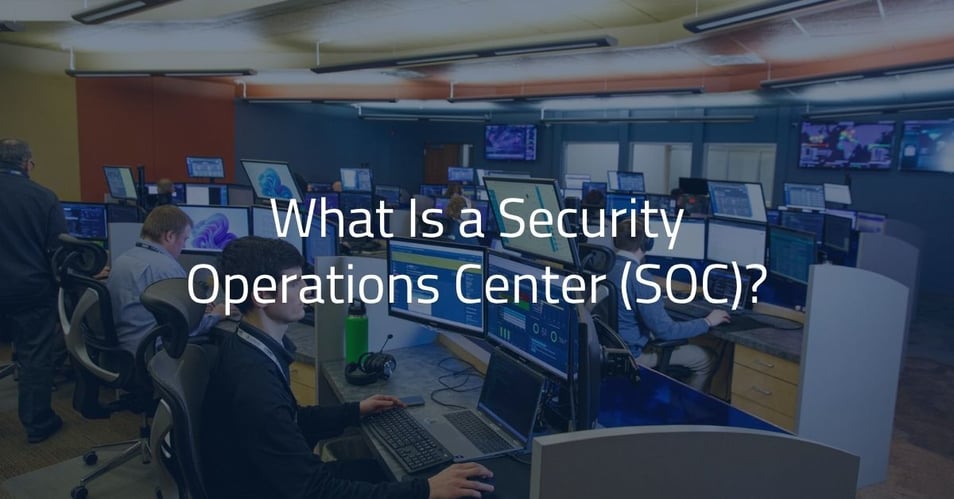
Cyber threats don’t stop at 5 p.m. and neither should your security operations. For organizations in regulated industries like healthcare, financial services, and construction, maintaining visibility into suspicious activity 24/7 has become essential for protecting sensitive data, meeting compliance requirements, and minimizing operational risk.
That’s where a Security operations center (SOC) comes in.
What is a security operations center (SOC)?
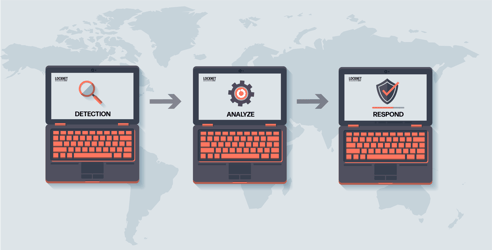
A security operations center (SOC) is a centralized cybersecurity function responsible for continuously monitoring, detecting, investigating, and responding to security threats across an organization’s IT environment.
A SOC combines skilled security analysts, advanced monitoring technologies, and established response processes to help organizations identify malicious activity in real time. Modern SOCs monitor endpoints, servers, networks, cloud environments, email systems, and user behavior to reduce cybersecurity risk and improve incident response.
For many organizations, the SOC serves as the operational backbone of their cybersecurity strategy.
What does a SOC team do?
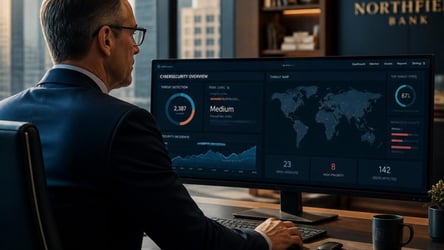
A security operations center is much more than a dashboard filled with alerts. Effective SOC teams actively investigate suspicious activity, validate threats, and help organizations respond quickly when incidents occur.
Continuous SOC monitoring and proactive threat detection
SOC analysts monitor security events using tools like:
- Security Information and Event Management (SIEM) platforms
- Endpoint Detection and Response (EDR) tools
- Firewalls and intrusion detection systems
- Cloud security monitoring solutions
These tools generate large volumes of security data. The SOC’s role is to identify which alerts represent real threats versus routine system noise.
Continuous monitoring helps organizations detect:
- Ransomware activity
- Unauthorized access attempts
- Insider threats
- Phishing attacks
- Suspicious network behavior
- Data exfiltration attempts
The faster a threat is identified, the faster it can be contained.
Alert triage and rapid incident response
Not every alert requires escalation. One of the most valuable functions of a SOC is alert triage, or the process of investigating and prioritizing security events based on risk and severity.
SOC analysts determine:
- Whether an alert is legitimate
- Which systems are impacted
- How widespread the issue may be
- What actions should be taken next
When a threat is confirmed, the SOC coordinates incident response activities such as isolating infected devices, disabling compromised accounts, and assisting internal IT teams with remediation efforts.
This human-led investigation process is critical. Automated tools alone cannot provide the contextual decision-making required during an active security incident.
Security threat intelligence and strategic reporting
Modern SOC teams also use threat intelligence to stay informed about emerging attack methods, vulnerabilities, and threat actors.
In addition to monitoring, SOC providers often deliver:
- Executive security reporting
- Compliance support documentation
- Vulnerability insights
- Incident summaries and recommendations
- Security posture assessments
These insights help leadership teams make informed cybersecurity and risk management decisions.
In-house SOC vs managed SOC: which is right for your organization?
Building an internal security operations center may seem appealing on paper, but maintaining a 24/7 operation is far more complex than many organizations expect.
Cost and staffing challenges of internal security centers
An effective in-house SOC requires:
- Multiple shifts of trained analysts
- Security engineers and leadership oversight
- Ongoing tool management and tuning
- Continuous staff training
- Redundant coverage for vacations and turnover
There is a well-documented cybersecurity talent shortage, with an estimated 4.8 million more cybersecurity professionals needed globally to secure organizations properly, according to the 2024 ISC2 Cybersecurity Workforce Study. Hiring and retaining qualified SOC analysts is difficult and expensive.
For most mid-sized organizations, building a fully staffed internal SOC capable of 24/7 monitoring is cost prohibitive. Even organizations with internal IT teams often struggle to maintain overnight, weekend, and holiday coverage without creating burnout.
A managed SOC model allows organizations to access enterprise-grade security operations without the overhead of building the infrastructure themselves.
Addressing continuous monitoring coverage gaps
Many internal IT departments already operate at capacity managing day-to-day technology needs. Adding continuous security monitoring responsibilities can stretch teams too thin.
This creates common gaps such as:
- Gaps in after-hours coverage
- Delayed incident response
- Alert fatigue
- Inconsistent monitoring processes
- Missed indicators of compromise
Managed SOC providers help close these gaps by delivering dedicated security expertise focused solely on threat detection and response.
For regulated organizations, that consistency matters. Threats often emerge outside normal business hours, and attackers frequently target organizations during weekends or holidays when internal staffing is limited.
What to expect from a managed SOC provider
Not all SOC providers deliver the same level of partnership.
A strong managed SOC provider should offer more than basic alert forwarding or helpdesk escalation. Organizations should expect:
- 24/7 monitoring
- Clear escalation procedures
- Dedicated security expertise
- Proactive threat hunting
- Strategic guidance and reporting
- Regional support and accountability
- Collaboration with internal IT teams
The most effective SOC relationships feel like an extension of your organization, not a disconnected third party.
Frequently asked questions about SOC services
Here are a few common questions organizations ask when evaluating SOC services.
Is outsourcing a SOC cost-effective for business?
For many organizations, yes. Outsourcing often provides access to 24/7 coverage, specialized expertise, and enterprise-grade monitoring tools at a lower cost than building and staffing a fully internal SOC operation.
Cybersecurity is more than an IT issue. It’s a business continuity, compliance, and operational resilience issue. Working with a managed IT and security partner that understands your environment, industry pressures, and long-term goals can help strengthen both security posture and organizational confidence.
If your team needs stronger protection without the burden of building a full in-house security operation, our managed IT services can help. With 24/7/365 monitoring, expert guidance, and responsive support, we help organizations stay secure, reduce risk, and keep business moving forward.