Antivirus software was designed for a different era where threats arrived on floppy disks and corporate networks had a clear perimeter. That era is over. Today, the question isn't whether your organization will be targeted, but whether your endpoint defenses can detect and stop an attack before it causes lasting damage. For organizations in regulated industries, the stakes are even higher. That's where managed endpoint security comes in.
What is managed endpoint security
Managed endpoint security is a continuously managed service in which a dedicated security provider monitors, detects threats across, and responds to incidents on every device connected to your organization's environment. This includes laptops, servers, mobile devices, cloud workloads, and more. Unlike a standalone security tool, it combines expert oversight, proven technology, and defined accountability into a single program.
Why managed endpoint security is a service, not a product
The service model distinction is what separates managed endpoint security from the tools most organizations already have. A product sits on a device and waits. A managed service means someone is actively watching, interpreting, and responding on your behalf, around the clock, with accountability for outcomes.
For IT leaders managing lean internal teams, that difference is the gap between reactive cleanup and proactive protection.
What is included in a managed endpoint security program?
A mature managed endpoint security program typically includes endpoint detection and response (EDR), behavioral analysis, 24/7 monitoring, automated threat containment, threat hunting, alert investigation, patch management, and vulnerability reporting. These aren't separate tools bolted together. They function as a unified defense layer managed by a security team accountable for your environment.
What counts as an endpoint in modern cybersecurity?
An endpoint is any device or system that connects to your network and that definition now extends well beyond the office workstation.
Traditional endpoints: desktops, laptops, and servers
The original definition of an endpoint was straightforward and typically included a desktop, a laptop, or a server inside the office. These remain critical attack surfaces. A single unpatched workstation or a server running outdated software can serve as the entry point for ransomware that spreads laterally across your entire network.
Modern endpoints: mobile devices, cloud workloads, and IoT
The endpoint surface today is far broader. Mobile devices used by remote employees, cloud workloads running in AWS or Azure, IoT devices on the shop floor or in a medical facility, and even networked printers all represent potential entry points. Each one is a door that an attacker can try.
This expansion is why fragmented endpoint management handled by different tools, different teams, or different vendors creates the exact blind spots that hackers exploit. Risk lives in the gaps between systems, not just within them.
Why traditional antivirus alone cannot protect your endpoints
Antivirus still plays a role, but today’s threats often move faster and more subtly than signature-based tools were built to catch.
The limitations of signature-based threat detection
Traditional antivirus compares files against a database of known malicious signatures and block matches. It works well against threats that have already been cataloged. But against modern attacks, it is largely ineffective.
Signature-based detection requires that a threat be known before it can be blocked. Today's hackers routinely use polymorphic malware, or code that rewrites itself to avoid matching any existing signature, along with living-off-the-land techniques that abuse legitimate system tools to move through your environment without triggering traditional alerts.
How modern cyberattacks bypass traditional antivirus
Modern attacks are often credential-based, not malware-based. An attacker obtains a valid username and password through phishing or a credential dump, logs in as a legitimate user, and moves quietly through the environment for days or weeks. Antivirus sees nothing unusual because nothing unusual appears to be happening.
For organizations subject to HIPAA, PCI DSS, FDIC guidance, or similar regulatory frameworks, this is a critical gap. A breach discovered months after initial compromise doesn't just carry financial consequences. It carries regulatory ones.
Core capabilities: what does managed endpoint security do?
A strong managed endpoint security program is built from several connected capabilities that work together to detect threats early, contain them quickly, and reduce risk over time.
1. Endpoint detection and response (EDR)
EDR tools record detailed telemetry from every and make that data available for real-time analysis. Unlike antivirus, EDR doesn't rely on signatures. It looks for suspicious patterns of behavior, regardless of whether the specific threat has been seen before.
2. Behavioral monitoring and anomaly detection
Behavioral analysis establishes a baseline for normal activity on a given endpoint or user account. When something deviates like an account accessing files it has never touched or an endpoint making outbound connections to an unfamiliar external IP, an alert is generated for investigation. Most breaches leave behavioral traces long before they cause visible damage.
3. Automated threat containment and remediation
Speed of response is the defining variable in whether an incident becomes a breach. When a threat is confirmed, managed endpoint security platforms can automatically isolate an infected device from the network, terminate malicious processes, and roll back unauthorized changes. And they can do this in seconds, not hours. This automated response capability is what prevents a single compromised endpoint from becoming a network-wide incident.
4. Proactive threat hunting and investigation
Threat hunting is the proactive search for indicators of compromise that automated tools may not have flagged. Experienced security analysts work through your environment looking for subtle signs of attacker presence like unusual persistence mechanisms, dormant malware waiting for a trigger, or evidence of lateral movement. When an incident does occur, an investigation determines how an attacker got in, what they accessed, and what needs to be remediated. This is the information regulators and leadership will require.
5. Continuous patch management and vulnerability reduction
Unpatched endpoints remain among the most common root causes of successful attacks. A managed program maintains visibility into patch status across your entire environment, prioritizes vulnerabilities based on active exploitation risk, and ensures critical updates are applied consistently — without relying on internal teams to track it manually across hundreds of devices.
Managed endpoint security vs. in-house security management
For many organizations, the difference between managing endpoint security internally and partnering with a provider comes down to expertise, speed, and around-the-clock coverage.
Overcoming the cybersecurity expertise and tooling gap
Enterprise-grade EDR platforms require specialized expertise to configure, tune, and operate effectively. Out of the box, they generate enormous volumes of alerts and many of them are false positives. Without analysts who know how to distinguish noise from signal, alert fatigue sets in quickly, and genuine threats get buried.
A managed security provider brings that expertise as part of the engagement. Their analysts spend every day in these platforms. They understand what normal looks like in regulated environments and what doesn't. That institutional knowledge is difficult to build internally and even harder to maintain as the threat landscape evolves.
Ensuring faster response times and 24/7 monitoring coverage
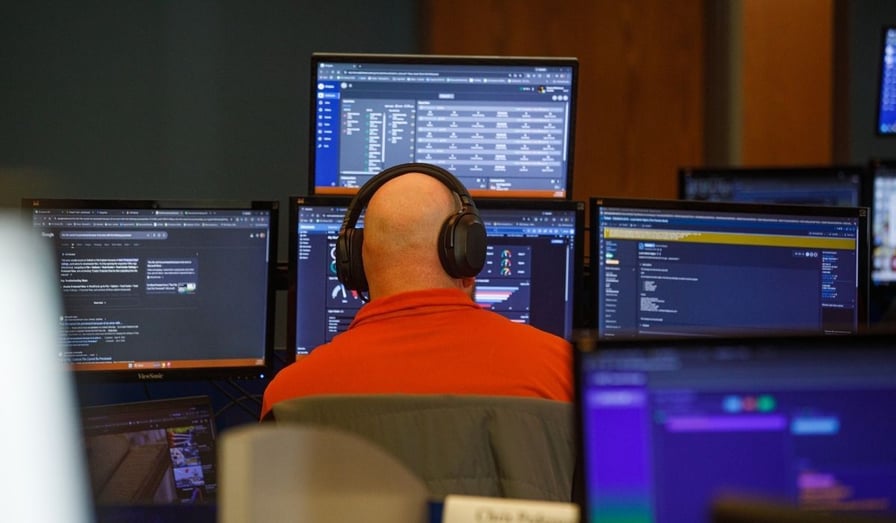
Attackers don't observe business hours. Most ransomware deployments and data exfiltration events occur overnight or on weekends, precisely because internal security teams are offline. A managed endpoint security provider maintains 24/7 coverage, with analysts available to investigate and respond at any hour. For organizations where a breach means regulatory scrutiny or operational shutdown, that continuous coverage is not optional.
How to choose the right managed endpoint security provider
Not every provider offering managed endpoint security delivers the same level of coverage or accountability. When evaluating partners, IT leaders in regulated industries should ask the following questions.
- Do they operate as a true security partner, or as a tool reseller? A provider should share accountability for outcomes, not hand you a dashboard and walk away.
- What is their demonstrated experience in your regulatory environment? A provider working with banking clients understands FDIC examination expectations. One with healthcare experience understands HIPAA breach notification requirements. Generic IT providers may not.
- How fast can they contain a threat? Mean time to contain (MTTC) is a meaningful metric. Providers should be able to answer it with specifics.
- Can the provider support your compliance documentation requirements? Managed endpoint security should produce audit-ready reporting, not just internal logs.
If your team needs broader support beyond endpoint protection, our managed IT services are designed to strengthen day-to-day operations while embedding security into every layer of your environment. From proactive monitoring and patch management to help desk support and managed endpoint security, we help you reduce risk, improve resilience, and free your internal team to focus on higher-value priorities.